Aura Safety Guide
Bad aura colors: what a dark or difficult aura color can really mean
Are any aura colors bad? Compare black, gray, muddy green, and dark red aura meanings without curses, fear-based claims, or moral labels.
No aura color makes a person bad
People search for bad aura colors when a reading feels dark, intense, or uncomfortable. The safer starting point is simple: no color means a person is evil, doomed, cursed, or spiritually broken. Aura colors are symbolic language, not moral verdicts.
A difficult color can still be useful. It may point toward stress, guardedness, overwork, emotional exhaustion, anger, grief, confusion, or a need for rest. The color is not the problem by itself. The question is how that energy is being expressed and whether it is asking for care.
Avoid any reader who uses a scary aura color to pressure you into buying cleansing, curse removal, or emergency spiritual protection.
Why aura colors can feel negative
Most colors have a gift and a shadow. Red can symbolize courage, vitality, and embodiment; it can also symbolize reactivity or survival stress. Blue can symbolize truth and calm; it can also become distance or silence. Green can symbolize compassion; it can also become over-giving and resentment.
A color feels bad when only the shadow is active or when the reading uses fear-based language. A better reading names the strain and then gives the person back agency: what can be noticed, softened, repaired, expressed, or changed?
Intensity
A strong color can feel overwhelming when the related life theme is under pressure.
Muddiness
Muted or muddy color language often symbolizes uncertainty, depletion, or mixed motives.
Darkness
Dark tones can symbolize inwardness, grief, protection, mystery, or contraction, not automatic danger.
Context
The same color means different things depending on the question, mood, and surrounding themes.
Common colors people worry about
Online aura lists often label certain colors as negative too quickly. That creates fear and dependency. A responsible interpretation gives each difficult color a humane translation.
Red
Not bad. It may show vitality and courage. In shadow, it can suggest anger, pressure, defensiveness, or a body stuck in fight mode.
Gray
Not bad. It may suggest transition, neutrality, uncertainty, or emotional weather that has not cleared yet.
Black
Not bad by default. Some readers use black for protection, grief, mystery, exhaustion, or withdrawal. It should not be used to scare someone.
Brown
Not bad. It can symbolize earthiness, practicality, fatigue, heaviness, or the need to return to simple support.
Muddy green
Not bad. It may point toward tired care, resentment, jealousy, or the need for boundaries around giving.
Muddy yellow
Not bad. It may point toward overthinking, nervous performance, scattered attention, or confidence under pressure.
A better question than which color is bad
Instead of asking whether a color is bad, ask whether it is balanced, underactive, blocked, or overactive. This is more useful because the same color can become healthy or strained depending on how it moves through life.
For example, red in balance can be embodied courage. Red in excess can be constant urgency. Red when blocked can feel disconnected from the body and basic support. The color itself is not the judgment; the pattern is the clue.
Balanced
The quality is available and proportionate.
Underactive
The quality is hard to access or express.
Blocked
The quality feels stuck, guarded, avoided, or frozen.
Overactive
The quality dominates and crowds out flexibility.
How to respond to a difficult aura reading
First, slow down. Do not make a major decision because a color description unsettled you. Ask which part of the reading matches a recent example and which part feels exaggerated. Keep the useful observation and discard the fear.
Then choose one ordinary action. A heavy red reading may ask for rest, food, movement, or fewer confrontations. A muddy green reading may ask for a boundary. A gray reading may ask for patience while a transition becomes clearer.
Name it
What exact feeling or situation does the color seem to describe?
Ground it
What is one non-mystical explanation that may also be true?
Choose one action
What small step would make the related life theme one percent healthier?
When not to spiritualize the result
If a reading triggers panic, shame, obsession, or fear that you are unsafe, step away from it. A good spiritual tool should leave you more grounded, not more dependent or frightened.
Persistent distress, major mood changes, health symptoms, trauma responses, or thoughts of self-harm should be handled with real support. Aura language can be poetic, but it should not replace professional care, trusted relationships, or practical problem-solving.
Save for later
Save the difficult aura colors guide
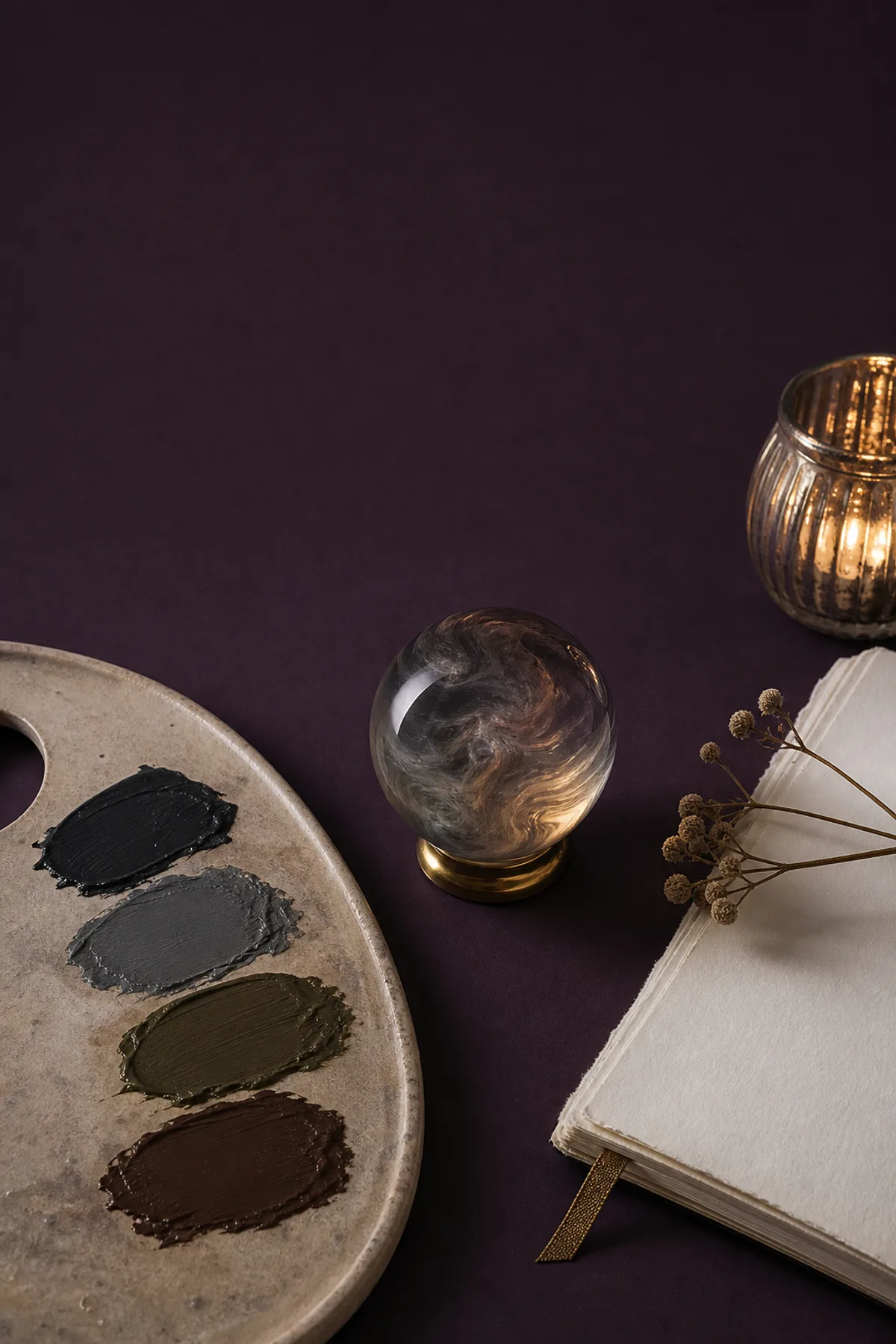
A vertical visual reference designed for a journal board or Pinterest. The full guide stays linked so the image is never separated from its context.
Frequently asked
What is the worst aura color?
There is no verified worst aura color. Aura meanings are symbolic, and every color can have both helpful and strained expressions.
Does a black aura mean evil?
No. Some readers use black to symbolize protection, grief, exhaustion, mystery, or withdrawal. It should not be treated as proof that someone is evil or cursed.
Can a bad aura color change?
In aura traditions, colors can shift with mood, environment, rest, attention, and life stage. ChakraLens treats colors as reflective snapshots rather than permanent labels.
Should I pay someone to remove a bad aura?
Be cautious. Fear-based pressure to buy cleansing or curse removal is a red flag. Reflection, rest, boundaries, and appropriate support are safer starting points.
Sources and further reading
Turn the guide into a personal reflection
Answer 12 reflective questions for a free aura and chakra reading. No sign-up; photo optional and processed privately on your device.
Begin my reading