Root Chakra Guide
Root chakra location: where Muladhara sits in the modern chakra map
Where is the root chakra located? Learn Muladhara meaning, base chakra language, pelvic floor and feet grounding references, blocked signs, and practical root chakra practices.
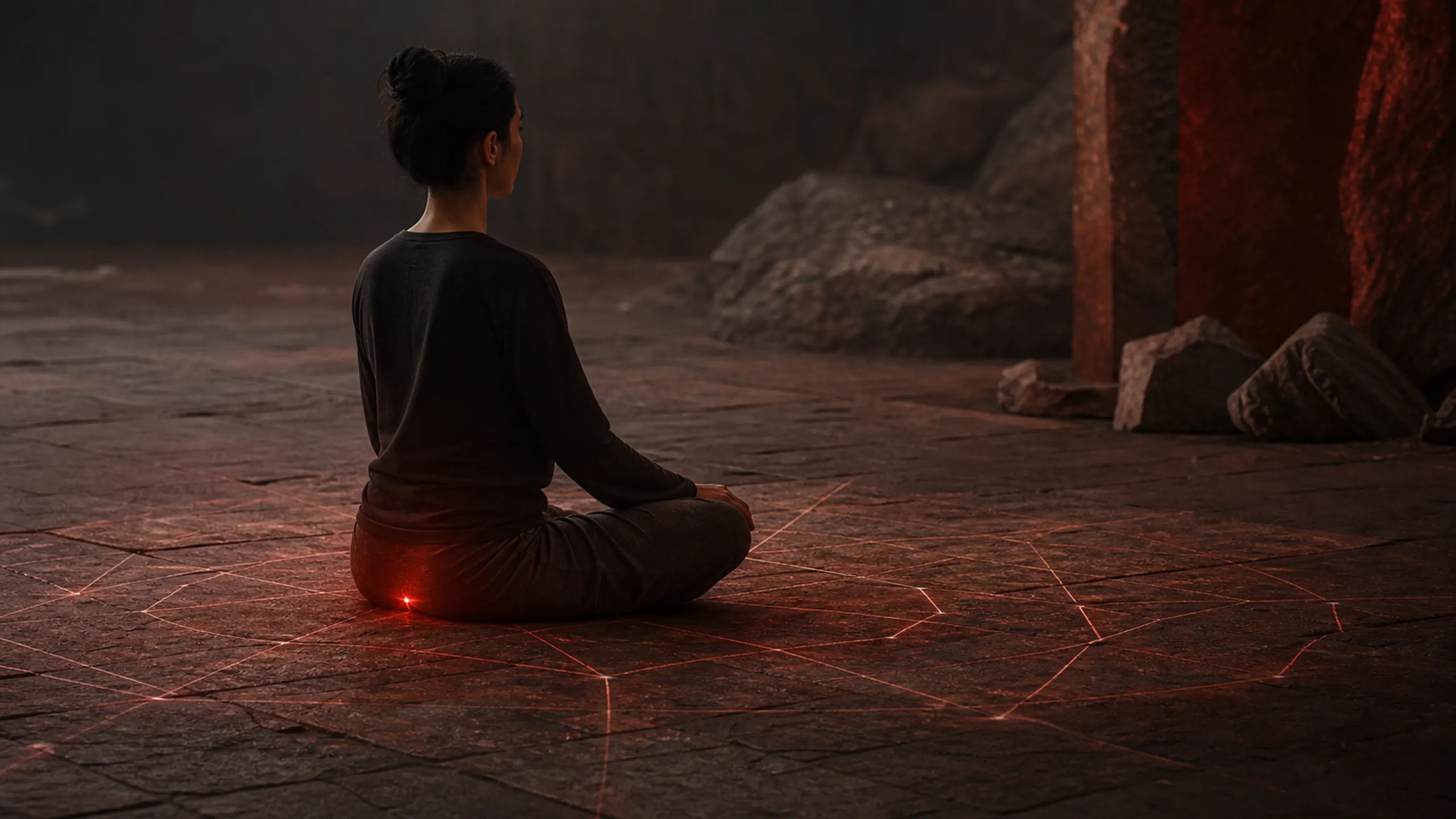
Root chakra cluster
Explore the root chakra by question
Use the overview for the map, then choose location, grounding practice, or a wider blocked-chakra comparison based on your intent.
Overview
Root chakra meaning
Start with Muladhara, location, symbols, signs, and the balance spectrum.
Current guide
Root chakra location
Separate symbolic body mapping from anatomy and learn practical grounding cues.
Practice
Root chakra healing
Work with food, rest, routine, home, resources, and steady support.
Compare
Blocked chakras
Tell underactive, blocked, balanced, and overactive language apart.
Aura bridge
Red aura meaning
See how modern red-aura symbolism connects with grounding and embodiment.
Where is the root chakra located?
Modern chakra practice usually places the root chakra at the base of the spine, the pelvic floor, or the lowest point of the torso. Many grounding practices also include the legs and feet because they give the symbol a practical body reference.
The root chakra is not a medical organ. Its location is a meditation and reflection point used to explore safety, support, survival stress, body presence, belonging, home, money pressure, routine, and the foundations of daily life.
Use root chakra location as symbolic body mapping, not anatomy. Pain, numbness, pelvic symptoms, or health concerns should be handled with qualified care.
Root chakra, base chakra, and Muladhara
Root chakra and base chakra usually refer to the same center. The Sanskrit name is Muladhara, often understood as root-support or foundation. The name itself explains the function: this is the symbolic ground beneath the rest of the chakra system.
If the root feels unstable, higher chakra work can become abstract. It is difficult to speak truth, open the heart, or trust intuition when the body feels unsafe or unsupported.
Common English names
Root chakra, base chakra, first chakra.
Sanskrit
Muladhara, often interpreted as root-support or foundation.
Modern color
Red in the widely used seven-color chakra chart.
Element
Earth, used symbolically for stability, body, and practical support.
Why the location includes the legs and feet
Many root chakra practices ask you to feel the feet, legs, or contact with the floor. This does not mean the chakra has moved. It means grounding is easier when attention includes the parts of the body that literally meet the ground.
For beginners, feet are often more accessible than the base of the spine. A simple practice like standing, walking slowly, or pressing the feet into the floor can make root chakra language less abstract.
Blocked root chakra signs
A blocked root chakra is often described as feeling unsafe, scattered, unsupported, financially anxious, disconnected from the body, or stuck in survival mode. These signs are reflective metaphors, not diagnoses.
The useful question is practical: what would make the day 5 percent more stable? The answer might be food, sleep, a budget check, a cleaned room, asking for help, or taking one task out of your head and putting it on paper.
Underactive root
Floating, avoidance, disconnection from body or routine.
Blocked root
Fear, instability, survival stress, or feeling unsupported.
Overactive root
Rigidity, hoarding, control, resistance to change, or clinging to routine.
Balanced root
Steady body presence, realistic support, and a sense that you have a place to stand.
A practical root chakra location exercise
Sit or stand with both feet touching the floor. Notice the points of contact: heels, toes, seat, legs, or the chair supporting you. Let the breath stay natural.
Then name three real supports in the room or in your life. Do not choose abstract spiritual ideas first. Choose ordinary supports: water, a door that locks, a person you can text, money you do have, a task you can finish, or the floor under your feet.
Root chakra location in meditation
If visualizing the base of the spine feels awkward, use the feet. If the feet feel numb or distant, use the seat. If body focus feels uncomfortable, keep your eyes open and name objects in the room.
Grounding is not about forcing calm. It is about giving attention a stable reference so the nervous system and imagination have somewhere ordinary to return.
Frequently asked
Where is the root chakra located?
Modern practice usually places the root chakra at the base of the spine or pelvic floor, often including the legs and feet as grounding references.
Is the root chakra the same as the base chakra?
Yes. Root chakra, base chakra, and first chakra usually refer to Muladhara, the symbolic foundation of the seven-chakra map.
What does Muladhara mean?
Muladhara is often interpreted as root-support or foundation. It points to stability, body, belonging, and the ground beneath the rest of the chakra system.
How do I ground the root chakra?
Use ordinary stabilizing actions: feel the feet, eat, rest, clean one area, check a practical resource, walk slowly, or ask for concrete support.
Sources and further reading
Turn the guide into a personal reflection
Answer 12 reflective questions for a free aura and chakra reading. No sign-up; photo optional and processed privately on your device.
Begin my reading