Beginner Practice
Chakra meditation: a gentle 10-minute practice for beginners
Try a gentle guided chakra meditation in 10 minutes. Move through the 7 chakras with breath, body awareness, and reflection—without forcing visualization or an energy experience.
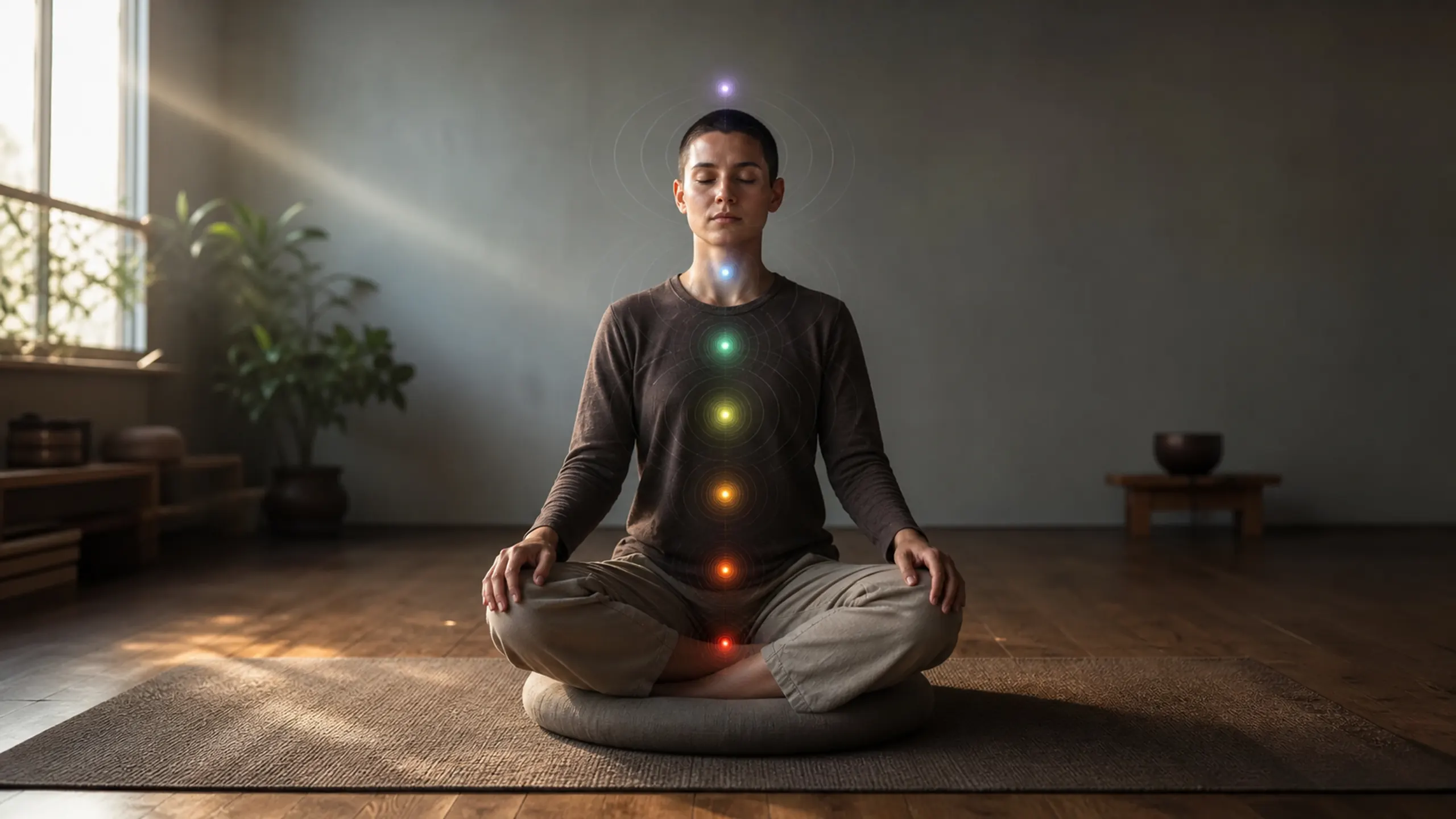
What chakra meditation is
Chakra meditation directs attention through symbolic energy centers, usually from the base of the spine to the crown. A session may include breath, mantra, visualization, sensation, or reflection on themes such as safety, expression, and meaning.
You do not need to believe that chakras are physical structures to use the practice. It can function as a structured body scan: seven pauses that move attention through different regions and invite a wider view of how you feel.
Meditation is not a replacement for medical or mental-health care. If closing your eyes or focusing inward feels uncomfortable, keep your eyes open, shorten the practice, or stop.
Prepare without making it complicated
Choose a position you can maintain without strain: a chair with feet on the floor, a cushion, or lying down if that is more accessible. Silence is optional. Ordinary room sounds can become part of the practice.
Set a modest timer
Ten minutes is enough. A shorter practice you repeat is more useful than an ambitious one you avoid.
Let the breath stay natural
Do not hold or force the breath. Simply notice the inhale and allow the exhale to soften.
Choose one anchor
Use body sensation, a color, or the name of each chakra. You do not need all three.
The 10-minute root-to-crown practice
Spend roughly one minute at each center, with a minute at the beginning and end. If a region feels blank, move on. The goal is not to manufacture sensation but to practice meeting whatever is present.
This is a guided chakra meditation rather than a test of concentration. You can work through all seven centers in order, pause at only one, or return to the same short practice for several days. A steady, ordinary practice is more useful than chasing a dramatic chakra-opening experience.
Arrive
Feel the chair or floor supporting you. Notice three sounds and one full breath.
Root
Bring attention to the base of the body and feet. Silently ask: what helps me feel supported today?
Sacral
Notice the lower belly. Ask: where does life want a little more movement or play?
Solar Plexus
Notice the upper abdomen. Ask: what choice is mine to make?
Heart
Notice the center of the chest without changing the breath. Ask: what can I offer, and what do I need to receive?
Throat
Notice throat, jaw, and mouth. Ask: what honest sentence is ready to be spoken?
Third Eye
Notice the brow and the space behind the eyes. Ask: what am I seeing clearly, and what am I assuming?
Crown
Notice the top of the head and the space around you. Ask: what gives this day meaning?
Return
Feel the whole body, open your eyes, and choose one small action before standing.
If visualization does not work for you
Many instructions say to see a glowing wheel of perfect color. Some people visualize vividly; others think in words, sensation, movement, or concepts. None is more spiritually advanced.
Replace color with temperature, sound, a short phrase, or simple location. For the heart, you might notice the movement of breath rather than imagining green. For the throat, you might hum gently or relax the jaw rather than seeing blue light.
After the meditation
A strong practice ends in ordinary life. Drink water, stretch, or write one line about the center that felt most available and the one that felt hardest to contact. Avoid turning a quiet or uncomfortable area into a diagnosis.
Meditation research is mixed and depends heavily on the method and the person. The U.S. National Center for Complementary and Integrative Health advises not using meditation to replace conventional care or postpone speaking with a health professional.
Keep
One insight that feels specific and useful.
Question
One interpretation that may be a story rather than a fact.
Do
One small action that brings the practice into the day.
Frequently asked
Which chakra should a beginner meditate on first?
Starting at the root provides a grounded structure, but there is no required order. You can also begin with the center whose theme feels most relevant today.
How long should chakra meditation last?
Five to ten minutes is enough for a beginner. Consistency and comfort matter more than duration.
Do I have to visualize chakra colors?
No. You can use body location, sensation, a word, sound, or question instead. Visualization ability varies naturally.
Can I do a 7 chakra meditation every day?
Yes, if the practice feels comfortable and stays gentle. A short daily body scan, natural breathing, and one practical reflection are enough; stop or simplify if inward focus increases distress.
Is chakra meditation the same as chakra healing?
No. Meditation can support relaxation and self-reflection, but it does not heal medical or psychological conditions and should not replace qualified care.
Sources and further reading
Turn the guide into a personal reflection
Answer 12 reflective questions for a free aura and chakra reading. No sign-up; photo optional and processed privately on your device.
Begin my reading