Aura Practice
How to see your aura: a calm experiment for beginners
Try a simple, low-pressure aura observation exercise—and learn why lighting, peripheral vision, contrast, and visual afterimages matter when interpreting what you notice.
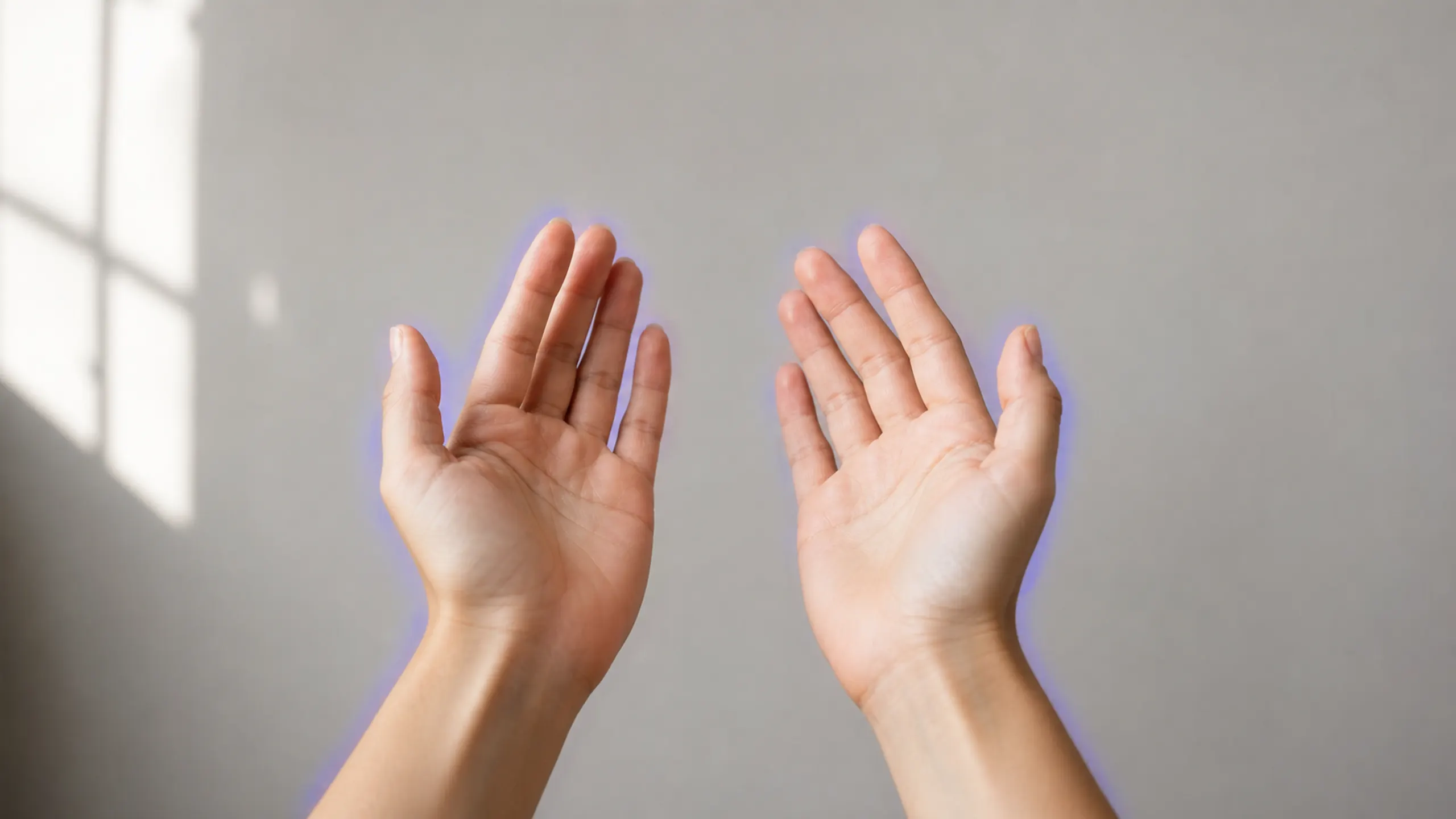
Start with the right expectation
Learning to “see” an aura is usually subtler than looking for a neon outline. Some people report a pale haze, a shift in brightness, a color at the edge of a hand, or simply a strong felt impression. Others see nothing unusual. None of these outcomes proves or disproves spiritual sensitivity.
Human vision is especially responsive to edges, contrast, and color adaptation. Looking steadily at a colored or dark object and then toward a light background can create an afterimage in a complementary color. Knowing this does not spoil the exercise; it helps you separate a visual effect from the personal meaning you choose to give it.
A five-minute hand observation exercise
Use soft daylight or a comfortably lit room. Avoid staring into bright lamps, the sun, or any light that strains your eyes. A plain off-white wall works better than a patterned background.
1. Settle
Sit comfortably and take three unforced breaths. Let your gaze soften instead of trying to concentrate harder.
2. Position
Hold one hand about 20–30 centimeters in front of a neutral wall, fingers relaxed and slightly separated.
3. Look beside the hand
Rest your attention on the space just beyond a fingertip rather than staring directly at the skin.
4. Notice, do not chase
Observe brightness, haze, color, warmth, or no change at all for 20–30 seconds.
5. Reset
Blink, look around the room, and relax your eyes. Write down what you noticed before interpreting it.
Stop if your eyes feel strained, you develop a headache, or the exercise feels unsettling. Aura practice should be gentle, never a test you have to pass.
Why you may see a glow or color
A faint outline can come from ordinary edge contrast: the visual system emphasizes the boundary between a darker hand and a lighter wall. A colored fringe may be influenced by lighting, nearby colors, screen exposure, or retinal adaptation. Peripheral vision also detects changes and motion differently from central detailed vision.
A spiritual practitioner may interpret the same experience symbolically. The grounded position is to keep both explanations available. You can appreciate the image as a prompt without declaring that every optical effect reveals a hidden fact about a person.
Change the background
If the color changes dramatically, contrast is probably influencing what you see.
Change the light
Compare daylight and warm indoor light without using anything painfully bright.
Switch hands
Notice whether the effect follows the hand, the side of your vision, or the background.
Try sensing before naming a color
Some aura practices are less about literal sight and more about attentive perception. Sit with someone you trust and notice the quality of the interaction before choosing a color: spacious or intense, quiet or quick, grounded or restless, open or guarded.
Only then ask which color fits the quality. This sequence reduces the temptation to force an impressive vision and often produces a more specific reflection. The meaning comes from the connection between the quality and the symbol—not from guessing the “correct” color.
Keep a useful observation journal
Record the date, light, background, physical state, first impression, and any color you noticed. After several attempts, look for patterns rather than treating one session as definitive. You may discover that certain colors follow particular lighting—or that certain felt qualities recur around specific situations.
If you want a structured comparison, take a ChakraLens reading and save the result. Return later under a different mood or environment. The interesting question is not whether the reading proves an aura exists, but whether the contrast helps you notice how your attention has changed.
Frequently asked
Why do I see a white outline around my hand?
Edge contrast and visual adaptation can create a pale outline, especially against a plain wall. Some spiritual traditions interpret it as an aura, but the visual effect alone cannot verify that claim.
Why does the aura color change when I blink?
Blinking resets part of your visual adaptation. If a color disappears or flips after blinking or changing backgrounds, lighting and afterimages are likely involved.
What if I cannot see an aura?
Nothing is wrong. Many people do not report visual colors. You can use aura language through journaling, imagination, or felt impressions instead.
Sources and further reading
Turn the guide into a personal reflection
Answer 12 reflective questions for a free aura and chakra reading. No sign-up; photo optional and processed privately on your device.
Begin my reading