Chakra Balancing
Chakra balancing: daily rituals for the seven centers
Try a practical chakra balancing routine for the 7 chakras: grounding, creativity, agency, care, expression, discernment, and meaning in everyday life.
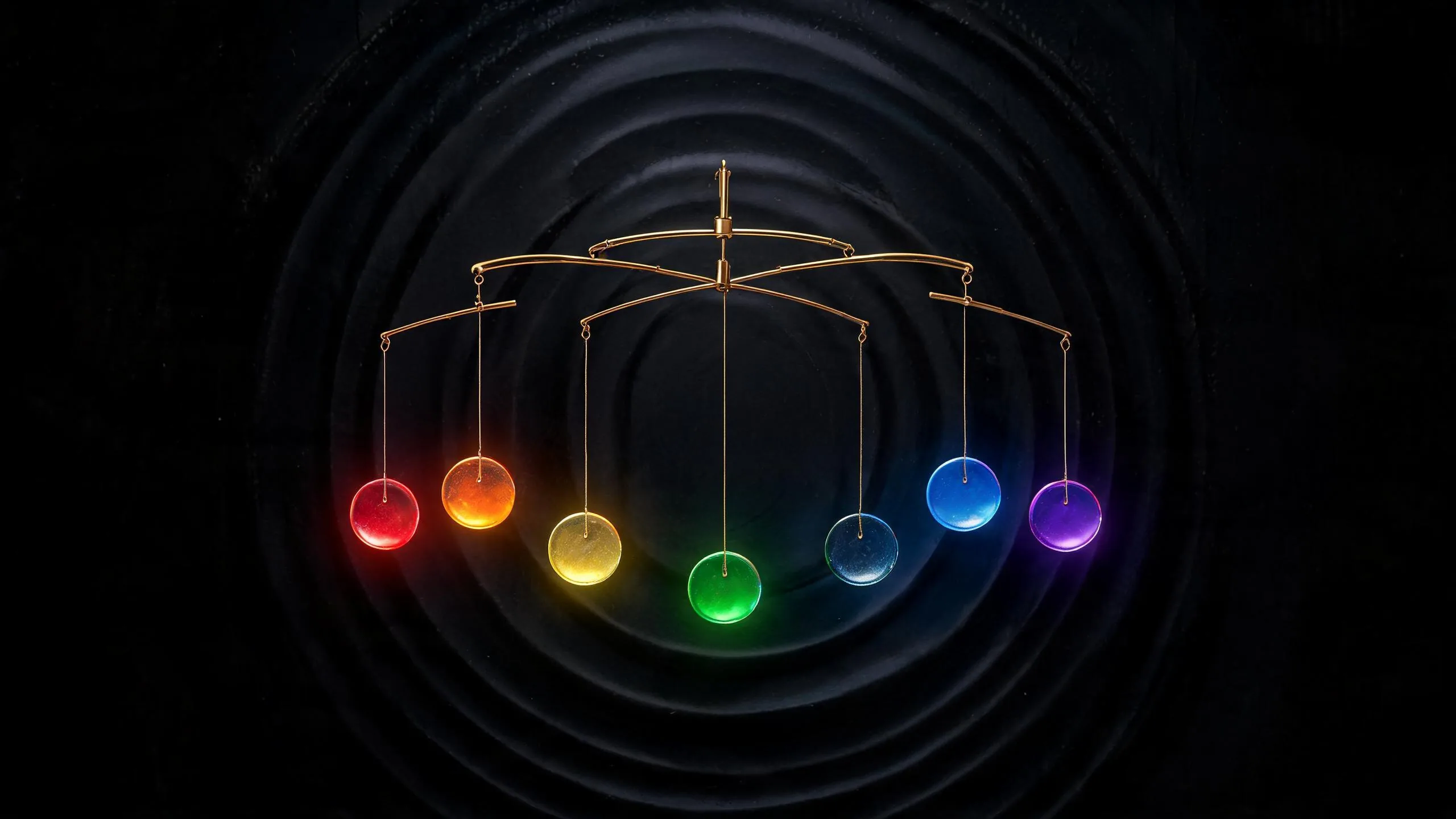
Chakra practice cluster
Choose a practice by the question you actually have
Opening, balancing, symbols, and blocked-sign language answer different searches. Use the page that matches the question instead of forcing every discomfort into one ritual.
Start
How to open your chakras
Use one gentle access practice per center without forcing a dramatic awakening.
Current guide
Chakra balancing
Learn when a quality needs more access and when it already needs a counterweight.
Chart
7 chakra symbols
Compare lotus petals, colors, elements, and seed sounds in one chart.
Solar signs
Solar plexus chakra signs
Compare blocked, overactive, and balanced Manipura patterns around choice and control.
Signs
Blocked chakras
Tell blocked, underactive, balanced, and overactive language apart.
Personal tool
Blocked chakra quiz
Find the center asking for care, then take one small next step.
Balance is flexible, not perfect
Chakra balancing does not mean scoring every center at 100 percent or feeling peaceful all day. It means having access to support, feeling, choice, care, voice, discernment, and meaning when they fit the moment.
A chakra can be quiet, steady, or overextended. The best response is often a small counterweight: grounding for scatteredness, rest for intensity, a boundary for over-giving, or a reality check for overthinking.
These are spiritual reflection practices, not treatment for physical or mental-health conditions. Keep what feels useful and seek qualified support for symptoms or distress.
Why the highest score is not the goal
A balanced quality changes with context. Strong solar energy may help when a decision is overdue, but the same force can become controlling in a collaborative room. A soft heart may support intimacy, yet constant emotional availability can erase needed boundaries. Balance is the ability to increase, soften, or redirect a quality rather than keeping every center equally bright.
This is why a perfectly even chart can be less informative than contrast. The useful questions are: what is available, what is missing, what is dominating, and what would be a proportionate response today?
Underactive
Make the quality easier to access with one small invitation.
Balanced
Notice the conditions that support flexibility and keep them.
Overactive
Use a counterweight rather than shaming the strength itself.
Pair chakras instead of treating them as seven islands
Chakra themes interact. Root support makes creative risk safer. Solar agency helps the heart set a boundary. Heart awareness changes the tone of throat expression. Third-eye discernment keeps crown meaning connected to reality.
When a practice stalls, look for the supporting center. If you know what to say but cannot say it, throat may need solar confidence or root safety. If you care deeply but keep rescuing, heart may need solar boundaries. A paired approach feels more human because real patterns rarely live in only one category.
A seven-day balancing rhythm
Give each center one day, then repeat the themes that are most useful.
Day 1 · Root
Stabilize one basic need or routine.
Day 2 · Sacral
Make room for one feeling or creative act.
Day 3 · Solar
Finish one small choice without over-explaining.
Day 4 · Heart
Practice care with a boundary.
Day 5 · Throat
Say or write one honest, kind sentence.
Day 6 · Third eye
Test one assumption against evidence.
Day 7 · Crown
Connect one ordinary action to a value or source of meaning.
Use your result as a starting point
If one theme keeps returning, begin there rather than forcing a full routine. The ChakraLens test can help you choose a focus, but the result is a reflection prompt, not a diagnosis or permanent identity.
Frequently asked
How do you balance all seven chakras?
Use a simple repeating rhythm: grounding, feeling, agency, care, expression, discernment, and meaning. One small action per theme is enough.
How long does chakra balancing take?
There is no fixed timeline. Treat it as an ongoing reflection practice rather than a process that must be completed perfectly.
Sources and further reading
Turn the guide into a personal reflection
Answer 12 reflective questions for a free aura and chakra reading. No sign-up; photo optional and processed privately on your device.
Begin my reading